
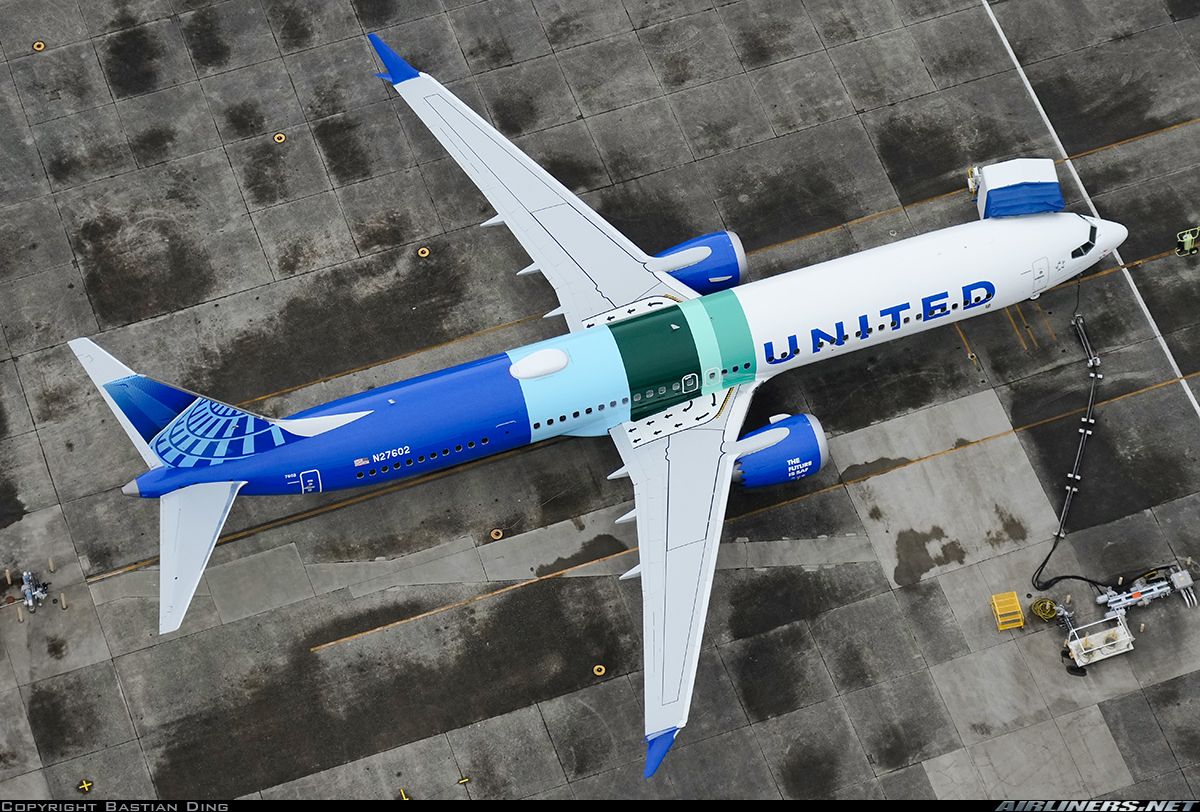
United Airlines Faces Unusual Dilemma Over Hundreds of Lie-Flat Seats Waiting for Delayed 737 MAX 10
United Airlines is facing an unusual problem created by years of delays to Boeing’s 737 MAX 10: hundreds of premium lie-flat business-class seats intended for the aircraft are reportedly sitting in storage, waiting for an airplane that has yet to enter the airline’s fleet.
United CEO Scott Kirby has acknowledged that the airline has been waiting a long time for the largest member of Boeing’s 737 MAX family. The MAX 10 was originally expected to enter service years ago, but certification delays have pushed the aircraft’s arrival far into the future.
The situation has left United with an inventory of specialized premium seats that were purchased for the airline’s original vision for the MAX 10.
A premium narrowbody that was years ahead of its time
United’s plans for the MAX 10 have always been closely connected to its strategy of expanding premium seating.
When United announced its major Boeing order in 2021, the airline said its 737 MAX 10 configuration would feature 20 United First seats and 64 Economy Plus seats. The aircraft was intended to provide significantly more premium capacity while giving United greater flexibility on high-demand routes.
The airline’s ambitions for the aircraft go back even further. United had considered using lie-flat seating on the MAX 10 for premium transcontinental flying, helping replace older aircraft serving those markets.
But Boeing’s certification programme did not progress as originally expected.
Years of waiting
The MAX 10 has faced a lengthy certification process, leaving airlines that ordered the aircraft to repeatedly revise their fleet plans.
United now appears considerably closer to receiving the aircraft. During its July 2026 earnings call, the airline said it had renewed optimism that its first MAX 10 could arrive in mid-to-late 2027.
United has also indicated that the MAX 10 will eventually replace MAX 9 deliveries and become an important part of the airline’s future narrowbody fleet.
The aircraft is attractive to United because its larger size allows the carrier to carry more passengers while benefiting from relatively low incremental operating costs.
But what happens to the seats?
That is where the problem becomes particularly interesting.
United has already invested in hundreds of lie-flat seats designed around its original MAX 10 plans. With the aircraft delayed for years, those seats have remained in storage rather than generating revenue.
Now that the MAX 10 is finally approaching certification and delivery, United must decide whether the original seat strategy still makes sense.
The airline could install the seats as originally planned, potentially giving passengers a premium experience on selected transcontinental routes.
Another possibility would be to adapt the seats for other aircraft or future cabin projects, although doing so could involve significant engineering, certification and installation costs.
United is doubling down on premium narrowbodies
The MAX 10 is arriving at a very different United Airlines from the one that originally ordered it.
The airline is now aggressively expanding premium seating across its fleet, including Airbus A321neo-family aircraft and its new premium-focused Boeing 787-9 configuration.
United said in July that its A321XLR and “Coastliner” aircraft would carry significant numbers of premium seats, while the airline also plans to expand its fleet of 787-9 aircraft featuring its elevated premium interior.
United has described premium narrowbody aircraft as a potential structural advantage, particularly on routes where demand does not justify a larger widebody aircraft.
That makes the MAX 10’s eventual arrival strategically important.
A problem created by Boeing’s delays
The stored seats are an unusual reminder of how aircraft delays can affect an airline far beyond its fleet schedule.
United planned its cabin products around an aircraft that was expected to be flying years ago. Instead, the airline has had to adapt its fleet strategy while waiting for Boeing to complete the MAX 10 programme.
Now the aircraft is finally getting closer to reality, United has to decide what to do with equipment that has been waiting almost as long as the aircraft itself.
For passengers, the eventual answer could be significant.
If United proceeds with its original premium concept, the MAX 10 could become one of the most interesting narrowbody aircraft in the airline’s fleet, combining a single-aisle aircraft with a substantially more premium cabin.
For United, however, the challenge is making sure those long-stored seats still fit the airline’s strategy in 2027 and beyond.
The Boeing 737 MAX 10 may finally be approaching the finish line — but United’s next question is what to do with the premium cabin it prepared for the aircraft years ago.