



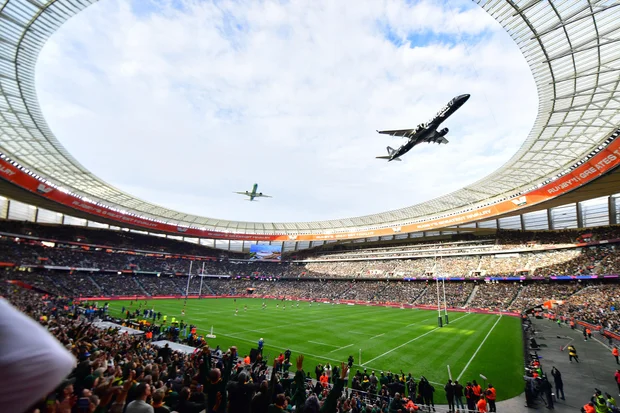
Airlink Flyover Under Investigation as FNB Stadium Display Is Withdrawn
A dramatic Airlink flyover over Cape Town’s DHL Stadium has triggered an aviation safety review by the South African Civil Aviation Authority (SACAA), putting a planned second stadium display in Johannesburg on hold.
Two Airlink Embraer aircraft performed a formation flypast over DHL Stadium on August 29, shortly before the Springboks faced the All Blacks. The spectacular manoeuvre thrilled thousands of rugby supporters inside the stadium, but footage showing the aircraft passing extremely close to the stadium roof quickly sparked an international debate about aviation safety.
The SACAA has now obtained the aircraft’s flight-data recordings and requested additional information from Airlink as part of its compliance assessment. The regulator said the review will determine whether there were any safety concerns that require further action, with a full report and recommendations expected once the investigation is complete.
Airlink has maintained that the flyover was carefully planned and carried out under established safety procedures. The airline had submitted the necessary documentation, while simulator preparation and safety briefings were completed ahead of the Cape Town operation.
However, the controversy has already affected the next planned flypast.
Airlink has withdrawn its application for a third flyover that was scheduled to take place over FNB Stadium in Johannesburg ahead of this weekend’s Springboks-All Blacks clash. The SACAA confirmed the withdrawal on September 2.
Airlink later indicated that unfavourable weather conditions were also a factor in the decision, stressing that safety would take priority over the planned spectacle.
The incident has reignited debate over the long-standing tradition of military and civilian aircraft flypasts at major South African sporting events. While supporters see the displays as an important part of the country’s sporting culture, aviation professionals and members of the public have questioned the safety margins involved when large passenger aircraft operate at very low altitudes near crowded stadiums.
For now, the focus is on the SACAA investigation. The regulator’s analysis of the flight data will be crucial in determining whether the Cape Town flyover complied with all applicable aviation requirements.
What began as a spectacular tribute to South African rugby has now become a major aviation-safety discussion — and the findings of the regulator could influence how future stadium flyovers are conducted.