


India Unveils Its New Crown Jewel: Navi Mumbai International Airport
India has officially opened the Navi Mumbai International Airport (NMIA) — a long-awaited mega infrastructure project set to redefine the country’s aviation landscape. Located about 35 kilometers from Mumbai’s existing Chhatrapati Shivaji Maharaj International Airport, the new hub marks a major milestone in India’s ambition to become one of the world’s leading aviation markets.
A Modern Engineering Marvel
Spread across more than 1,160 hectares in the Ulwe region, Navi Mumbai International Airport has been designed as a greenfield, twin-runway facility capable of handling up to 90 million passengers annually once all development phases are complete.
The project, developed by Adani Airports Holding Limited in partnership with the City and Industrial Development Corporation (CIDCO), will operate in multiple stages.
- Phase 1, now complete, features one runway, a single passenger terminal, and capacity for 20 million passengers per year.
- Future phases will expand this to four terminals, two parallel runways, and 3.25 million tonnes of annual cargo handling capacity.
Design Inspired by India’s Identity
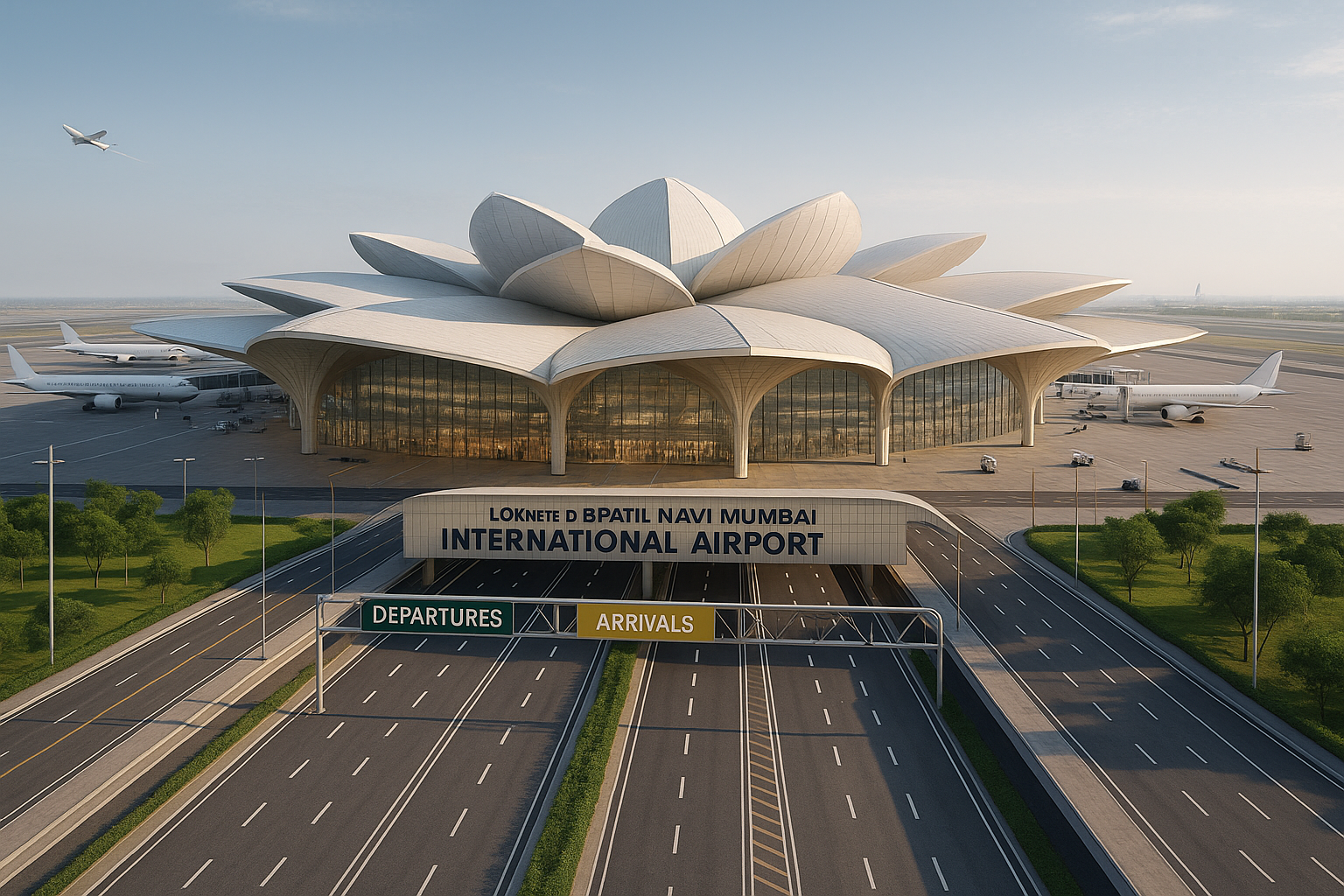
The airport’s architecture is deeply symbolic. The terminal’s roof and interior design draw inspiration from the lotus flower, representing purity, growth, and India’s cultural heritage. Natural light fills the terminal through petal-like skylights, and the layout combines aesthetics with efficiency — balancing sustainability and functionality.
Smart and Sustainable Infrastructure
Navi Mumbai International Airport has been billed as India’s first AI-driven airport. Key features include:
- Biometric boarding and check-in systems
- AI-enabled passenger flow management
- Automated baggage handling
- Digital airside operations
Environmental sustainability is also central to the project. The airport integrates rainwater harvesting, solar power generation, and green landscaping that helps offset its carbon footprint. Its developers have pledged to make NMIA a net-zero carbon airport by the end of the decade.
Boosting Connectivity and Growth
Strategically located near the Mumbai–Pune Expressway and key industrial corridors, the airport will significantly ease congestion at Mumbai’s existing airport while boosting regional trade, logistics, and tourism. It’s also expected to become a major cargo hub, improving export efficiency for India’s western region — especially pharmaceuticals, perishables, and electronics.
Industry analysts believe NMIA will propel Mumbai’s position as a global aviation gateway, rivaling major hubs like Dubai, Doha, and Singapore in the coming years.
The Start of a New Era
With its modern architecture, digital systems, and strong focus on sustainability, Navi Mumbai International Airport stands as a symbol of India’s forward-looking vision — a fusion of technology, culture, and ambition.
From the skies, its lotus-shaped terminal gleams like a statement of progress — signaling that India’s next era of aviation excellence has officially taken flight.